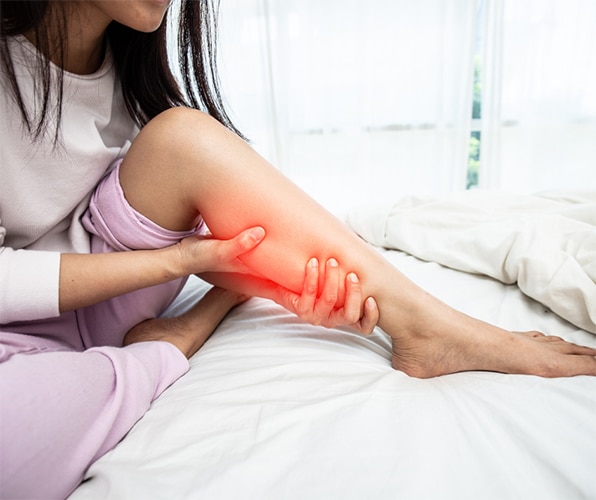
What helps with joint pain and stiffness?
Short answer: What helps with joint pain and stiffness depends on the cause. For osteoarthritis, tailored strengthening and regular movement are core treatments; weight management can help if you are living with overweight. Short-term pain relief may make movement easier. Nutrition has a supporting role, including vitamin C for normal collagen formation and cartilage function. A hot, swollen joint or severe pain after injury needs medical assessment, not a supplement.
Stiff knees on the stairs, uncomfortable fingers and painful hips can disrupt everyday life. The starting point is to understand the cause, choose appropriate care and decide whether nutritional support is suitable.
Our Active Move formula combines vitamin C, manganese and copper with named botanical extracts, a UC-II® collagen complex and hyaluronic acid. Below, we explain where those ingredients fit alongside practical joint care, rather than treating a capsule as the answer to every painful joint.
First, check whether joint pain needs medical attention
Seek urgent medical advice if a painful joint is hot and swollen, or if joint pain is accompanied by feeling generally unwell, fever or shivering. Get emergency assessment for severe pain after a fall or injury, an inability to walk or bear weight, a joint that looks out of place, or tingling or loss of feeling after injury. These are among the warning signs in NHS joint-pain guidance.
Arrange a medical appointment if pain affects sleep or normal activities, swelling keeps returning, symptoms worsen, or home care has not helped after two weeks. Longer-lasting or recurring morning stiffness is another reason to arrange a review, particularly with swelling or symptoms in several joints. A duration alone does not diagnose arthritis or make the situation an emergency. Do not assume that persistent finger, knee or hip pain is simply ageing.
Knees, fingers and hips: start with the pattern
Joint pain can follow an injury or repetitive activity, but it can also occur with osteoarthritis, inflammatory arthritis or infection. The NHS overview of possible causes is a useful orientation, not a way to diagnose yourself.
|
Where or when you notice it |
What to pay attention to |
A useful next step |
|
Knees during walking, stairs or after activity |
Whether pain is linked to loading, and whether swelling or an injury is present |
Discuss persistent symptoms and a tailored exercise plan; seek emergency assessment if you cannot bear weight |
|
Fingers during gripping or after rest |
Which joints hurt, whether both hands are affected, and how long morning stiffness lasts |
Seek assessment for persistent swelling or prolonged stiffness rather than assuming ordinary overuse |
|
Hips during walking or everyday tasks |
How pain affects walking, sleep and normal activities |
Arrange assessment if symptoms persist or limit function; seek emergency care after injury if you cannot walk |
|
Any joint that suddenly becomes hot and swollen |
Fever, shivering or feeling generally unwell |
Seek urgent medical advice |
These are observation prompts based on joint-pain guidance, not separate diagnoses.
What helps with joint pain and stiffness day to day?
Make movement manageable, then build consistency
For diagnosed osteoarthritis, NICE recommends therapeutic exercise tailored to your needs, including local muscle strengthening and general aerobic fitness. Supervised sessions may be appropriate.
Ask a physiotherapist to help adapt exercise to the affected area and your current ability. Knee symptoms, painful finger joints and hip pain need an individual approach rather than one exercise copied across all three.
Some discomfort can occur when starting osteoarthritis exercise, but regular, consistent exercise can reduce pain and improve function over time. That does not mean pushing through a new injury, a hot swollen joint or severe unexplained pain. Those situations need assessment first.
Match rest and cooling to the situation
For general joint discomfort, NHS guidance advises resting the affected joint when possible without stopping movement completely. Adjust activities that aggravate symptoms and follow any individual care plan. For diagnosed osteoarthritis, regular tailored exercise remains a core part of care.
A recent sprain or strain needs a different early approach. In the first two to three days, NHS sprain-and-strain guidance recommends protecting and resting the injury, with a wrapped ice pack for up to 20 minutes every two to three hours. Do not put ice directly on the skin. Once pain no longer stops you moving the injured area, gentle movement helps prevent stiffness. This is short-term injury care, not a universal treatment for every painful or stiff joint; a hot swollen joint, severe pain or an inability to bear weight needs assessment.
Consider weight management when it is relevant
If you have osteoarthritis and are living with overweight or obesity, NICE recommends support with weight management to reduce pain and improve physical function and quality of life.
Ask about appropriate pain relief
Pain relief can help make therapeutic exercise possible. For knee osteoarthritis, NICE recommends a topical non-steroidal anti-inflammatory drug, and says it can be considered for other affected joints. A pharmacist or clinician can advise whether this is suitable for you.
Oral anti-inflammatory medicines need additional checks because of possible stomach, kidney, liver and cardiovascular risks, as well as interactions with other medicines. Do not combine treatments or stop prescribed medication to make room for a supplement.
Where nutrition and Active Move fit
A joint-care plan and nutritional support do different jobs. Exercise and medical treatment address symptoms and function; selected nutrients contribute to normal tissue functions. For example, vitamin C contributes to normal collagen formation for the normal function of cartilage. Manganese contributes to the normal formation of connective tissue, and copper contributes to maintenance of normal connective tissues.
Our Active Move formula brings together nutrients with defined roles in cartilage and connective tissue, an undenatured type II collagen ingredient, and characterised plant extracts. Two capsules provide 40 mg vitamin C, 2 mg manganese and 1 mg copper. The useful next question is what the other ingredient forms contribute to the composition, and what their research can actually tell you.
Understand the ingredient form, not just the headline amount
UC-II® is an undenatured type II collagen ingredient. It is not interchangeable with a gram-dose hydrolysed collagen powder. A published UC-II® trial used 40 mg daily for 180 days in adults with knee osteoarthritis. That describes the ingredient research, not a clinical trial of Active Move or proof of an effect in fingers or hips.
Our daily serving contains 40 mg of UC-II® complex, including 10 mg type II collagen, of which 1.2 mg is undenatured type II collagen. These are nested amounts, not three separate additions. Keeping that distinction clear makes label comparisons more meaningful.
Botanical extracts: look for their defining compounds
AprèsFlex® is the Boswellia serrata resin extract in our formula. Its defining marker is AKBA, a boswellic acid. Human-use technical literature describes AprèsFlex® as standardised to at least 20% AKBA. Our daily serving contains 100 mg of the named extract; this characterises the named extract, not a finished-capsule batch assay.
Belinal® supplies a different botanical component: a water extract from Abies alba silver fir branches. Its characterised polyphenol mixture includes lignans, phenolic acids and flavonoids, with compounds such as lariciresinol, catechin and epicatechin. We provide 50 mg of Belinal® per daily serving.
Standardisation describes an extract's composition; it does not by itself establish pain relief. For Belinal®, the joint-related research described by its developer uses isolated cells, not a trial showing that our 50 mg oral serving relieves joint pain. We therefore describe its polyphenol contribution without promising a clinical effect.
The remaining ingredients are declared separately: 10 mg hyaluronic acid, a substance naturally present in connective tissues, and 5 mg BioPerine® black pepper extract supplying 4.75 mg piperine. These composition details belong in a complete label comparison; they are not presented here as additional pain-relief claims.
What is in a daily serving of Active Move?
The following amounts are for two Active Move capsules. NRV means nutrient reference value.
|
Ingredient |
Amount per daily serving |
What the detail tells you |
|
AprèsFlex® Boswellia serrata resin extract |
100 mg |
Boswellia resin extract characterised by its AKBA marker; see the human-use technical description |
|
Belinal® silver fir branch extract |
50 mg |
Silver fir extract supplying a characterised mixture of lignans, phenolic acids and flavonoids |
|
UC-II® collagen complex |
40 mg |
Undenatured type II collagen ingredient, distinct from hydrolysed collagen; includes 10 mg type II collagen, of which 1.2 mg is undenatured |
|
Vitamin C |
40 mg, 50% NRV |
Contributes to normal collagen formation for normal cartilage function, under the permitted vitamin C claim |
|
Hyaluronic acid |
10 mg |
Oral hyaluronic acid, separate from the UC-II® collagen component |
|
BioPerine® black pepper fruit extract |
5 mg |
Quantified black pepper extract providing 4.75 mg piperine |
|
Manganese |
2 mg, 100% NRV |
Contributes to normal connective tissue formation, under the permitted manganese claim |
|
Copper |
1 mg, 100% NRV |
Contributes to maintenance of normal connective tissues, under the permitted copper claim |
All quantities come from our current product information. The nutrient functions above concern normal tissue function, not pain relief or the treatment of arthritis.
How to use Active Move, and who should avoid it
Take two capsules daily after a meal with a glass of water. Do not exceed the recommended daily amount. A pack contains 60 capsules, providing 30 daily servings.
Our Active Move safety instructions specify these suitability restrictions:
- Active Move is intended for healthy adults.
- It is not suitable during pregnancy or breastfeeding.
- We advise against using it if you take anticoagulants such as warfarin or any other medicines.
Do not stop a medicine to take Active Move; discuss your joint symptoms and suitable options with your clinician instead.
Keep the product out of children's reach, in a dark, dry place below 25°C. Food supplements do not replace a varied, balanced diet or a healthy lifestyle. Active Move is a food supplement, not a medicine for joint pain or arthritis.
Frequently asked questions
Is morning stiffness always osteoarthritis?
No. Stiffness can have different causes. NICE's clinical criteria for osteoarthritis include activity-related pain in people aged 45 or over, with no morning stiffness or stiffness lasting no longer than 30 minutes. These criteria help a clinician assess osteoarthritis; they are not a stand-alone self-test. Arrange a review for prolonged or recurring stiffness, particularly with swelling or several affected joints.
Should I rest painful knees or keep moving?
It depends on the cause. For diagnosed osteoarthritis, tailored exercise is a core treatment. A new sprain or strain needs initial protection and rest, followed by movement once pain no longer stops you. Severe pain after injury or an inability to bear weight needs emergency assessment rather than exercise advice.
Can a knee supplement study tell me what will help my fingers or hips?
Not automatically. The joint studied, diagnosis, ingredient form and dose matter. Research in knee osteoarthritis should not be presented as proof that a finished formula treats pain in fingers or hips. Persistent symptoms need a joint-specific assessment.
Can I take Active Move with my prescribed medicines?
We advise against using Active Move with anticoagulants or other medicines. Keep taking prescribed treatment as directed and ask your clinician about appropriate joint-care options. The full product warnings and directions should be checked before use.
Your next step
Start with the cause of your symptoms and a manageable movement plan. If an optional nutritional addition is appropriate for you, explore Active Move's full formula and suitability information: two capsules provide vitamin C, manganese and copper alongside named extracts, UC-II® complex and hyaluronic acid. Check the medicine and pregnancy exclusions before choosing it, and seek assessment for persistent or unexplained joint pain.